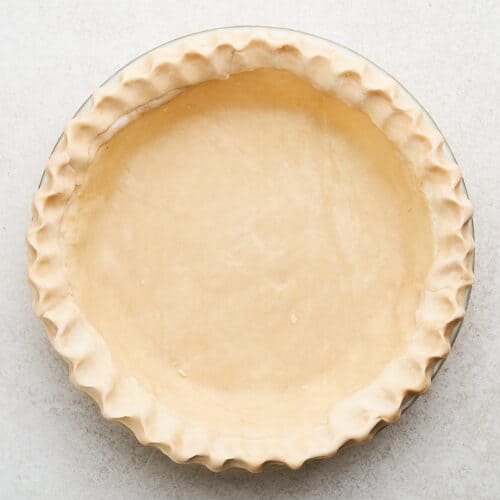
Best Vegan Pie Crust
Learn how to make a perfectly buttery, flaky, and rich vegan pie crust from scratch in this detailed tutorial! We’re sharing all the most important success and troubleshooting tips, FAQs, and much more.
Equipment
- Pie dish
- Rolling Pin
- Food processor
- Mixing bowls
- Pie weights
Ingredients
- 1 ¼ cups all-purpose flour
- ½ teaspoon salt
- 6 tablespoons vegetable shortening
- 2 tablespoons cold vegan butter stick (cubed)
- 3-5 tablespoons ice-cold water
Instructions
Dough
- Add about 1 cup of the flour and salt to a food processor. Pulse 2-3 times to mix. Drop in cubed vegan butter and vegetable shortening, then pulse until no dry flour remains and the dough is starting to form clumps, about 20-25 pulses.
- Scrape the dough away from the sides, then add the rest of the flour and pulse a few more times until just incorporated. Transfer the dough to a mixing bowl.
- Starting with 3 tablespoons, pour ice-cold water over top and fold and press the dough with a spatula until it comes together, adding more water as needed. The dough should barely stick together when you squeeze a handful.
- Note: If you don’t have a food processor, whisk the flour and salt together in a mixing bowl. Incorporate the shortening with a pastry cutter or two forks until it resembles pea-size granules.
Chill
- Form the dough into a disc, wrap it tightly in cling wrap, and transfer it to your fridge to chill for at least 30-60 minutes but preferably 2 hours. The resting period helps hydrate the flour, making rolling out much easier.
- If you’ve let the dough chill for longer than 60 minutes, allow it to sit out at room temperature for ~10 minutes before rolling.
Roll
- Lightly flour a working surface and a rolling pin. Roll the dough out to about 12 inches for a 9-inch pie (or enough that it’s ~2-3 inches bigger than your pan).
- Pick the crust up by carefully rolling it over your rolling pin. Transfer and unroll it over the pie dish, gently pressing down the edges to fit the crust into the dish.
- Trim and fold over any edges, then pinch or crimp the edges however you want. Place the pie dish in the fridge for 30 minutes prior to filling or baking.
To blind bake
- If the recipe calls for blind-baking the crust, preheat the oven to 375°F.
- Place a piece of parchment paper or foil over the crust (it helps to crinkle it beforehand to make fitting it into the crust easier).
- Fill it with pie weights, ensuring they spread out to cover the entire bottom and press against the sides of the crust. If you don't have pie weights, dry beans or uncooked rice can work as an alternative.
- Place the pie crust in the preheated oven. Bake for about 15 minutes until the edges are starting to brown and appear set.
- Remove the pie from the oven, then carefully remove the parchment with the weights. Using a fork, lightly prick the bottom and sides of the crust. This process, called "docking," will help prevent the crust from puffing up as it finishes baking.
- Return the pie crust to the oven. For a fully baked crust, bake for about 14-15 more minutes until the bottom crust is golden brown. For a partially baked crust, bake it for 7-8 more minutes until the crust is just beginning to brown.
- If you’re making a no-bake pie, let the blind-baked crust cool completely before adding the filling. For a pie that will be baked longer (like vegan pumpkin pie), the filling can be added when the crust is still warm. Happy eating!
Notes
- Use a glass pie dish: Glass pie dishes are our favorite because they conduct heat evenly, making sure the bottom of the crust browns evenly. Plus, you’re able to see when the sides have browned.
- Cold ingredients: Always use cold ingredients! You can also keep the bowl chilled for maximum flaky layer results.
- Keep the dough cold: If your dough starts to warm up as you’re working it, stop what you’re doing and chill it for about 15-20 minutes, then start again.
- Pulse don't blend: When using a food processor, remember to pulse rather than continuously blend to avoid overworking the dough.
- Allow resting time: Don’t skip the resting period in the fridge. It helps hydrate the flour and makes the dough easier to work with and roll.
- Gentle rolling: Roll out the dough evenly but gently to prevent it from cracking or becoming tough.
- Pie shield: Prevent the edges from burning by using a pie shield. You can buy one or make your own using aluminum foil.
- Trimming excess: Leave about a 1-inch overhang when trimming the dough so you have enough crust to work with for crimping and other designs.
- Don’t forget the docking: This prevents puffing up during baking. Just a few fork pricks will do!
- Blind baking: Use pie weights or dry beans to keep the shape during blind baking.
- Don’t overmix: Once you add water, mix the dough gently for a tender crust.
- Nutritional information is a rough estimate and should not be taken as health advice.
Nutrition
Serving: 1pie crust | Calories: 1474.8kcal | Carbohydrates: 119.2g | Protein: 16.1g | Fat: 104g | Saturated Fat: 25.9g | Polyunsaturated Fat: 29.4g | Monounsaturated Fat: 42.4g | Trans Fat: 13.5g | Sodium: 1170mg | Potassium: 167.4mg | Fiber: 4.2g | Sugar: 0.4g | Calcium: 25.2mg | Iron: 7.3mg
Don't miss another recipe!Subscribe to our newsletter!