
Butternut Squash Curry
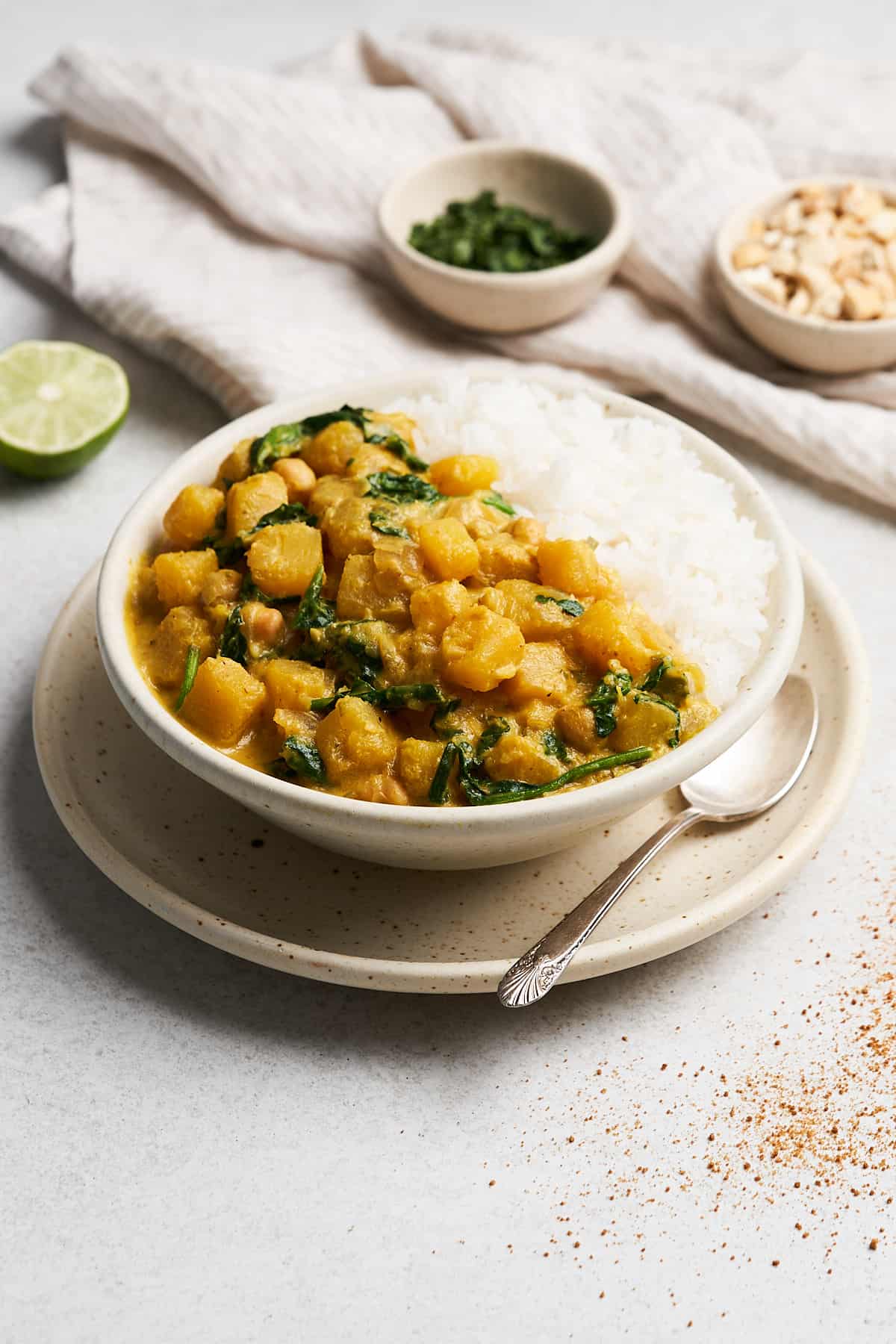
Warm yourself from the inside out with this one-pot butternut squash curry! It features sweet butternut squash and aromatic Thai spices bathed in a creamy coconut milk broth. Ready in 30 minutes, it’s perfect for a quick yet comforting weeknight dinner!
💛 Why you’ll love this recipe
- Simple ingredients: All of the ingredients are easily accessible! You probably already have most of them in your kitchen right now.
- One-pot meal: Everything comes together in one pot, making preparation and cleanup a breeze!
- Plant-based nutrients: This butternut squash curry is packed with plant-based protein, fiber, and other nutrients from chickpeas, spinach, and aromatics.
- Easy to make oil-free: If you don’t consume oil, you’ve got options! Just cook down part of the coconut milk or use water to sauté the veggies.
If you love butternut squash curry, you should check out our vegan red Thai curry, vegan butter chicken, butternut squash soup, and vegan ramen.
🍛 Creamy butternut squash curry
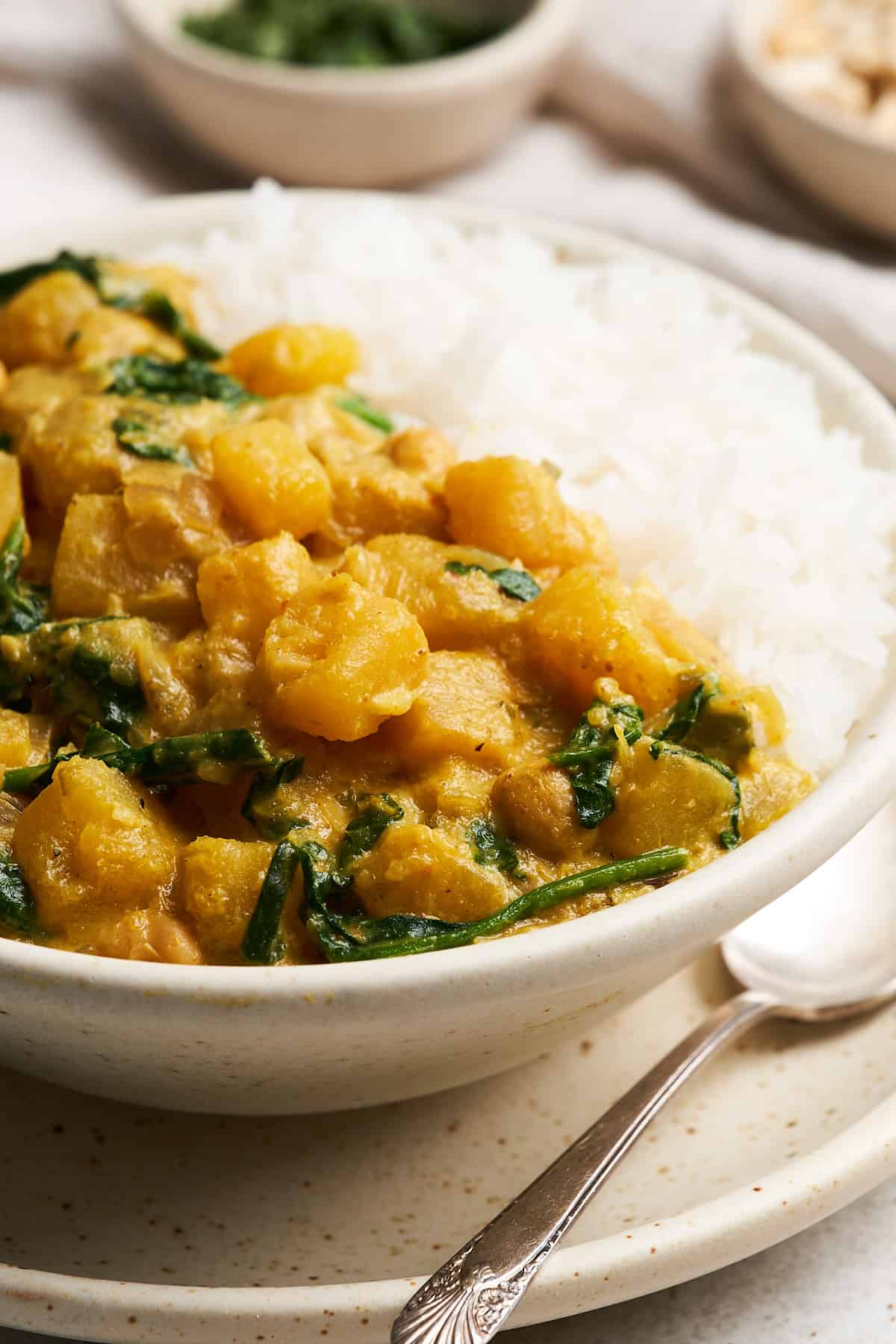
This creamy butternut squash curry has become our most recent obsession in the kitchen because it’s so simple to make! Seriously, all you need is a pot and about 30 minutes to create the most aromatic, rich, and satisfying meal.
The natural sweetness and tender texture of butternut squash blend perfectly with bold Thai-inspired flavors like lemongrass, galangal, garlic, and shallots. Plus, the coconut milk broth adds an indulgent flavor without weighing you down like dairy-based broths do.
We like to load even more flavors and nutrients into our butternut squash curry by incorporating spinach and chickpeas, but it’s so easy to customize this recipe! Add your favorite veggies, serve it over rice or noodles, or add fresh garnishes like chopped peanuts and cilantro. The choice is yours!
🌱 Which Thai curry pastes are vegan?
One of the main ingredients in Thai curry paste is fish sauce or shrimp paste (or both). However, we’ve found the brands Aroy-D and Mae Ploy are generally vegan-friendly in the yellow paste but not always in the red, so we recommend double-checking.
Thai Kitchen offers a vegan option as well, but their curry paste is not as flavorful as the other two brands. You should be able to find Aroy-D and Mae Ploy at most Asian food markets, but Thai Kitchen is more readily available in regular supermarkets.
🛒 Ingredients & substitutions
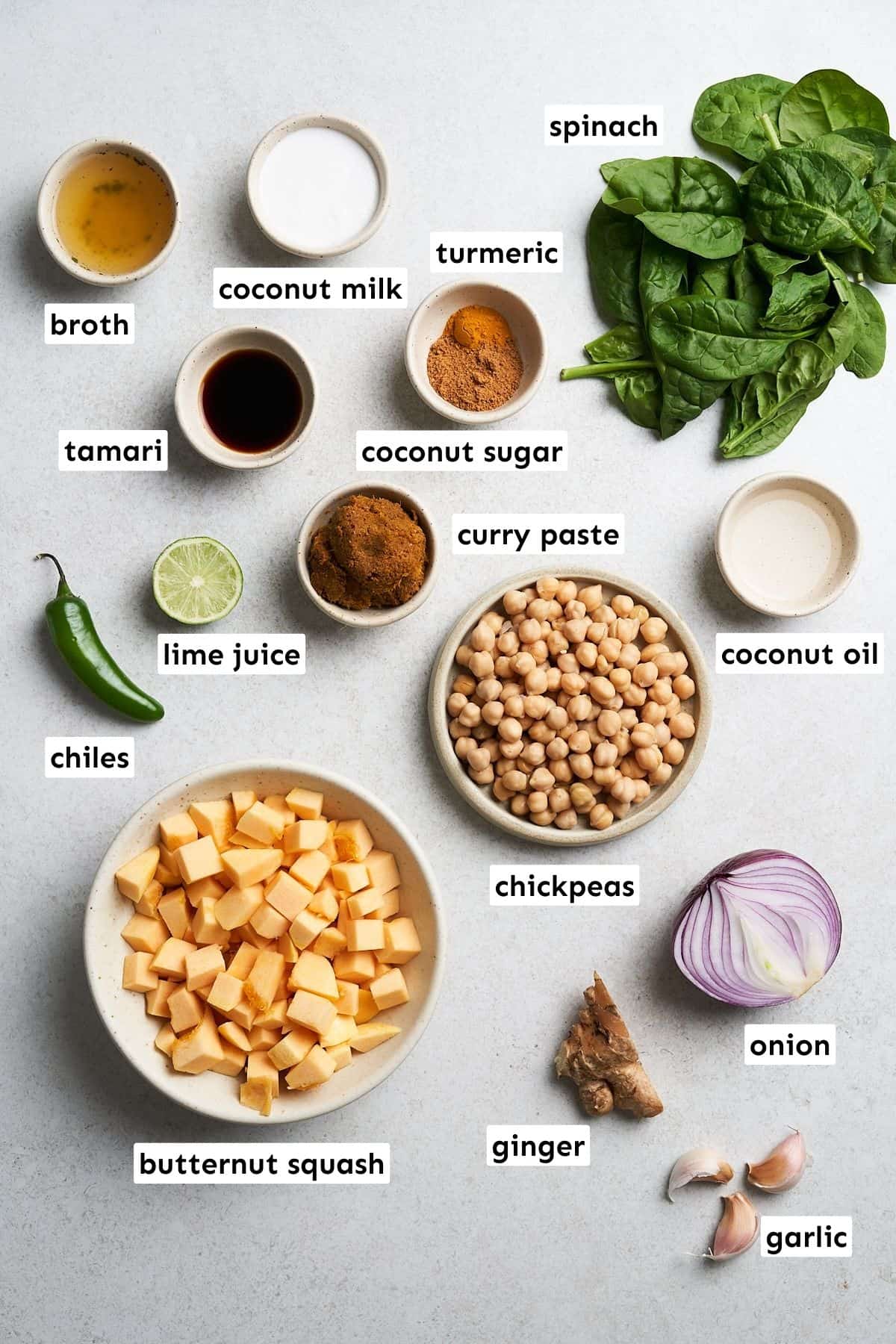
- Coconut oil: Imparts a subtle tropical flavor that complements the coconut milk broth perfectly! You can also use avocado oil or olive oil if you prefer.
- Red onion: Adds a slight sweetness and depth of flavor. For a milder onion flavor, replace red onions with shallots. White or yellow onions also work.
- Garlic: Infuses the curry with an intoxicating savory aroma you can’t miss out on! Garlic powder can be used in a pinch, but we really suggest fresh garlic here.
- Chiles: Use any green or red chiles for a spicy kick (we just use serranos, but Thai green or red chiles are ideal). Skip the chiles for a milder version.
- Ginger: Provides a mildly spicy, sweet, and warming note to the curry. If you can find fresh galangal, you can use that instead for a more earthy, pine-like flavor.
- Curry paste: You can use red or yellow curry paste (we used yellow for this recipe). Just don’t forget to double-check the ingredient list for fish sauce or shrimp paste!
- Turmeric: For extra color and health benefits! Feel free to omit the turmeric or swap in other spices like cumin or coriander.
- Butternut squash: Adds a sweet, buttery flavor and a perfectly creamy texture. Kabocha squash, sweet potatoes, or acorn squash will work well too.
- Chickpeas: Provides a healthy dose of plant-based protein and a nutty flavor. You can also use navy beans, great northern beans, cannellini beans, and lima beans.
- Coconut milk: Gives the curry broth a rich and creamy consistency. Opt for full-fat coconut milk for the best results. Our go-to brand is Aroy-D!
- Vegetable broth: Makes up the rest of the curry base, adding a savory element. If you don’t have vegetable broth, water will also do the trick.
- Tamari: Provides a savory, umami note. Liquid aminos or coconut aminos are also great, or you can use soy sauce if you’re not gluten-free.
- Coconut sugar: Balances the savory, tangy, and spicy ingredients. You can also use brown sugar, coconut nectar, or maple syrup if you don’t have coconut sugar.
- Lime juice: To finish this butternut squash curry off with a tangy, acidic element. Make sure to use freshly squeezed lime juice, not lime juice from concentrate.
- Spinach: You can also use other leafy greens like kale, chard, or collard greens.
For a complete ingredient list and step-by-step guide, scroll down to our recipe card.
📝 How to make butternut squash curry
Step 1: Sauté the onions
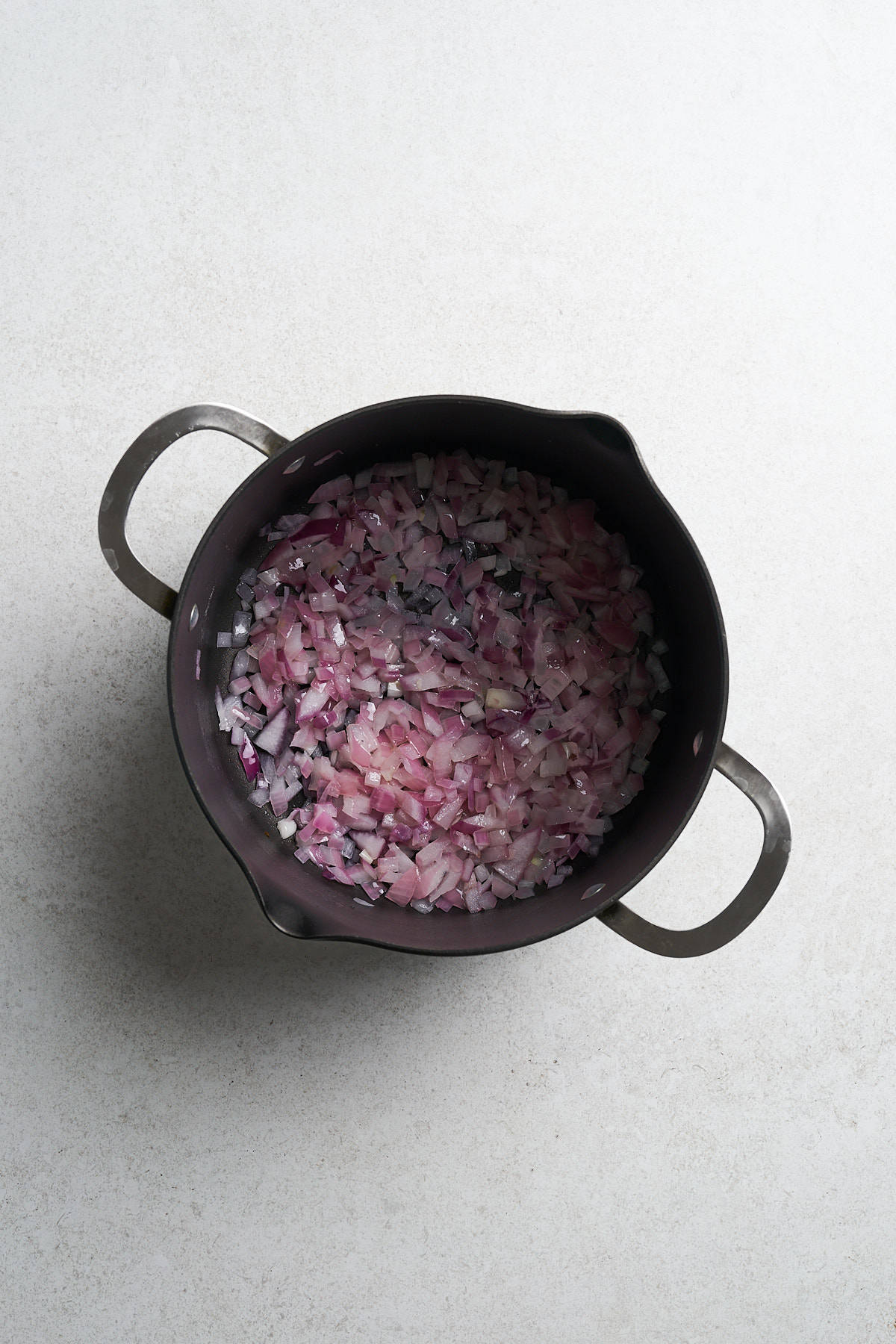
Heat the coconut oil in a Dutch oven or large pot over medium heat. Sauté the onions for a few minutes until they’re translucent and tender. This brings out their natural sweetness.
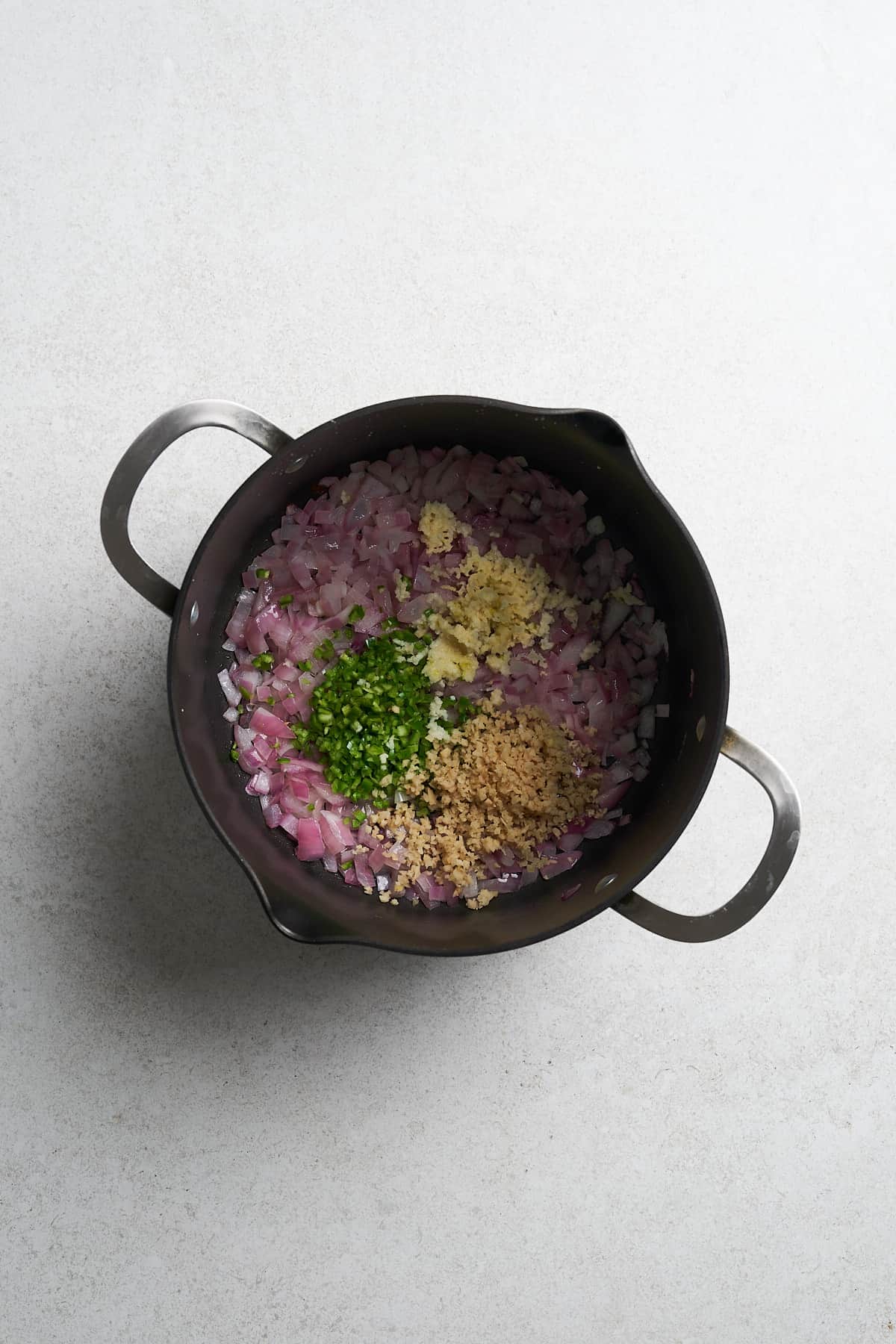
Step 2: Add the aromatics
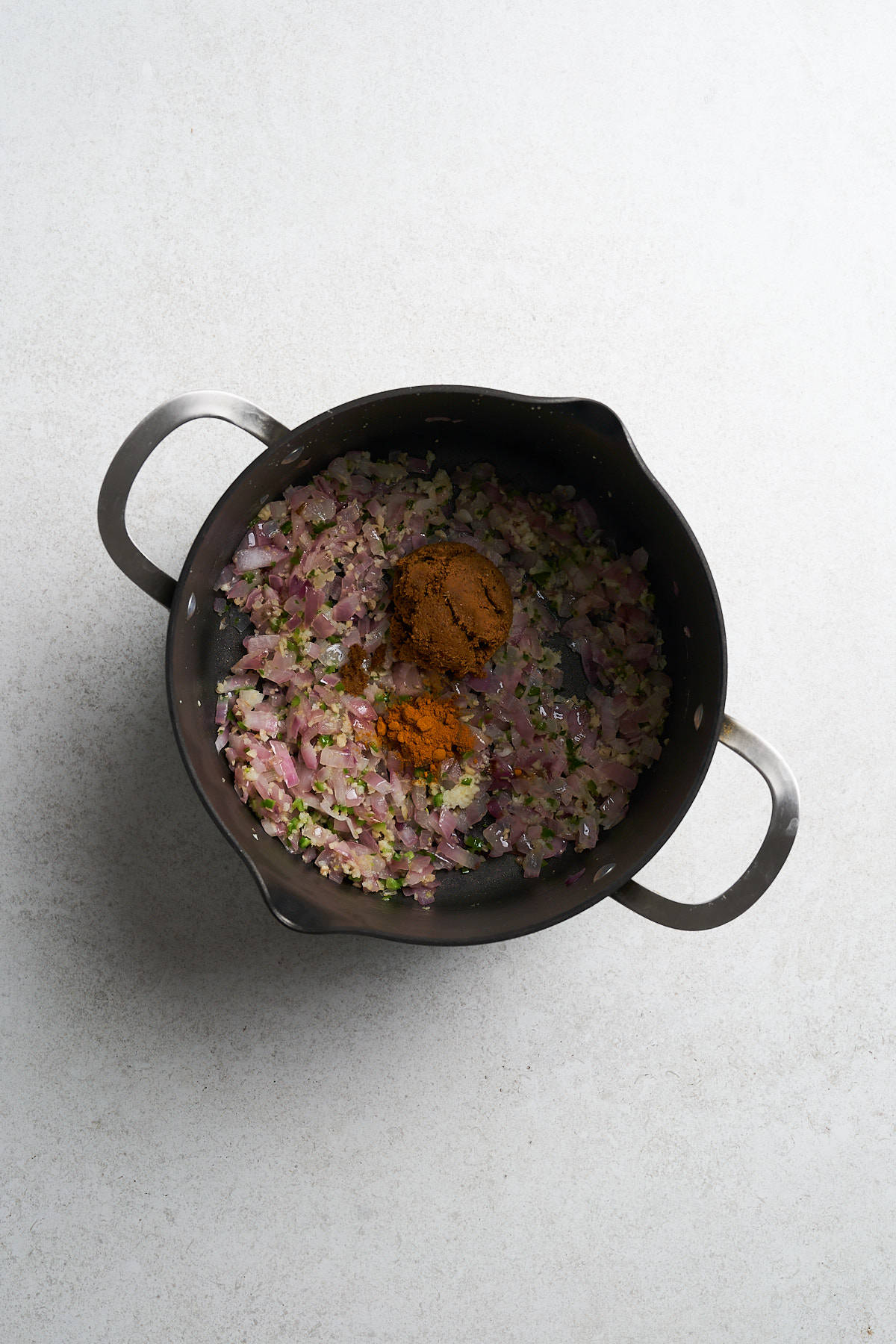
Incorporate the garlic, chiles, and ginger to create a flavor-packed base for the curry. Then, add the curry paste and turmeric, stirring to combine. Opening up spices like this amplifies their flavors tenfold!
Step 3: Mix in the main ingredients
With the base ready, you can add the butternut squash, chickpeas, coconut milk, and vegetable broth. Let the mixture simmer, allowing the flavors to meld and deepen. You can add more vegetable broth as needed to keep the squash covered.


Step 4: Finishing touches
Once the squash is tender, stir in tamari, coconut sugar, and lime juice. These ingredients bring out a perfect balance of salty, sweet, and sour notes characteristic of Thai cuisine.
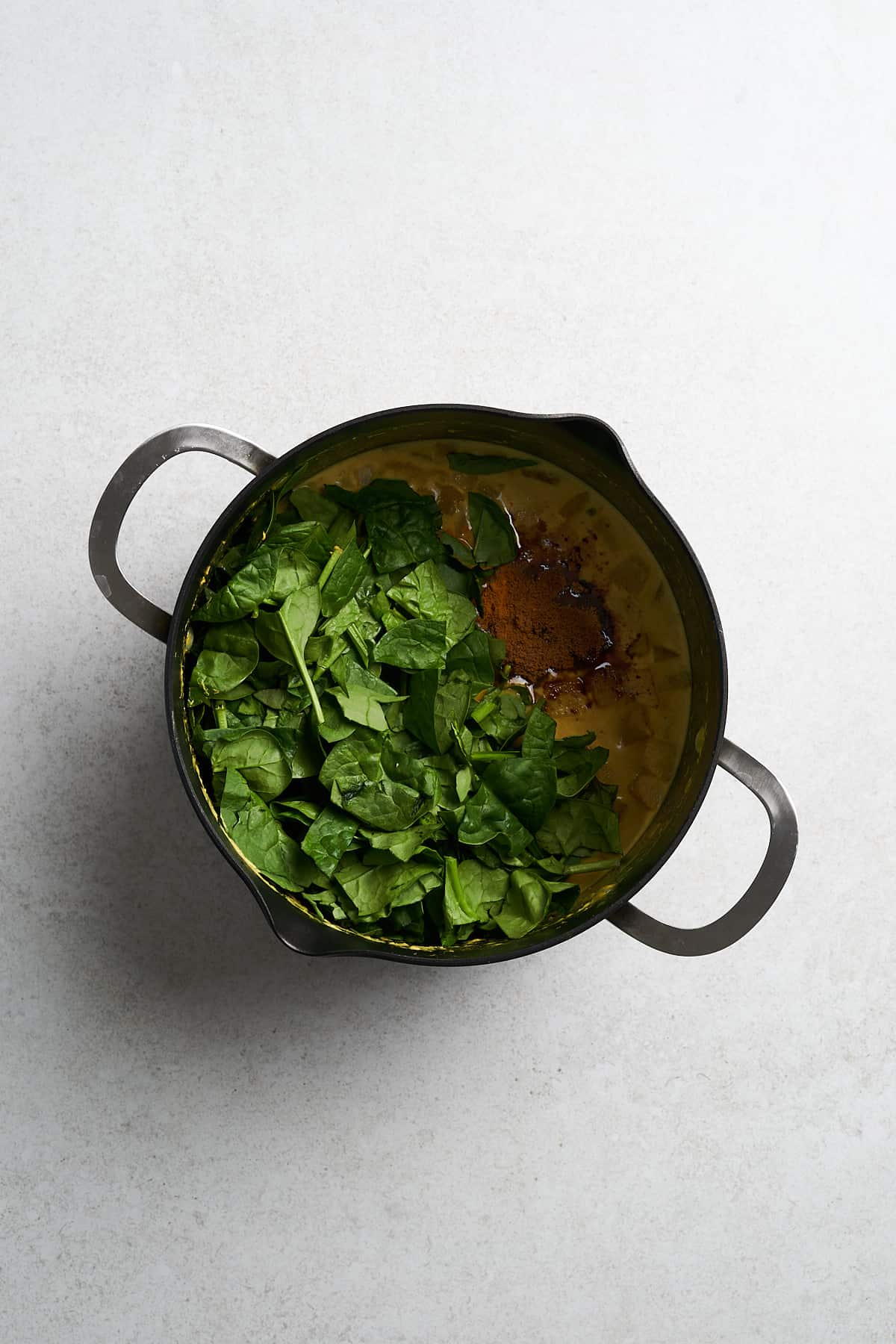
Mix in the baby spinach or kale until wilted. Lastly, taste and season the curry with salt to your liking, then serve it immediately while hot. Happy eating!
If you have questions about this butternut squash curry recipe, check out our FAQs or leave a comment down below!
🍚 What to serve with butternut squash curry
For a wholesome and balanced meal, pair your butternut squash curry with sides and garnishes like these:
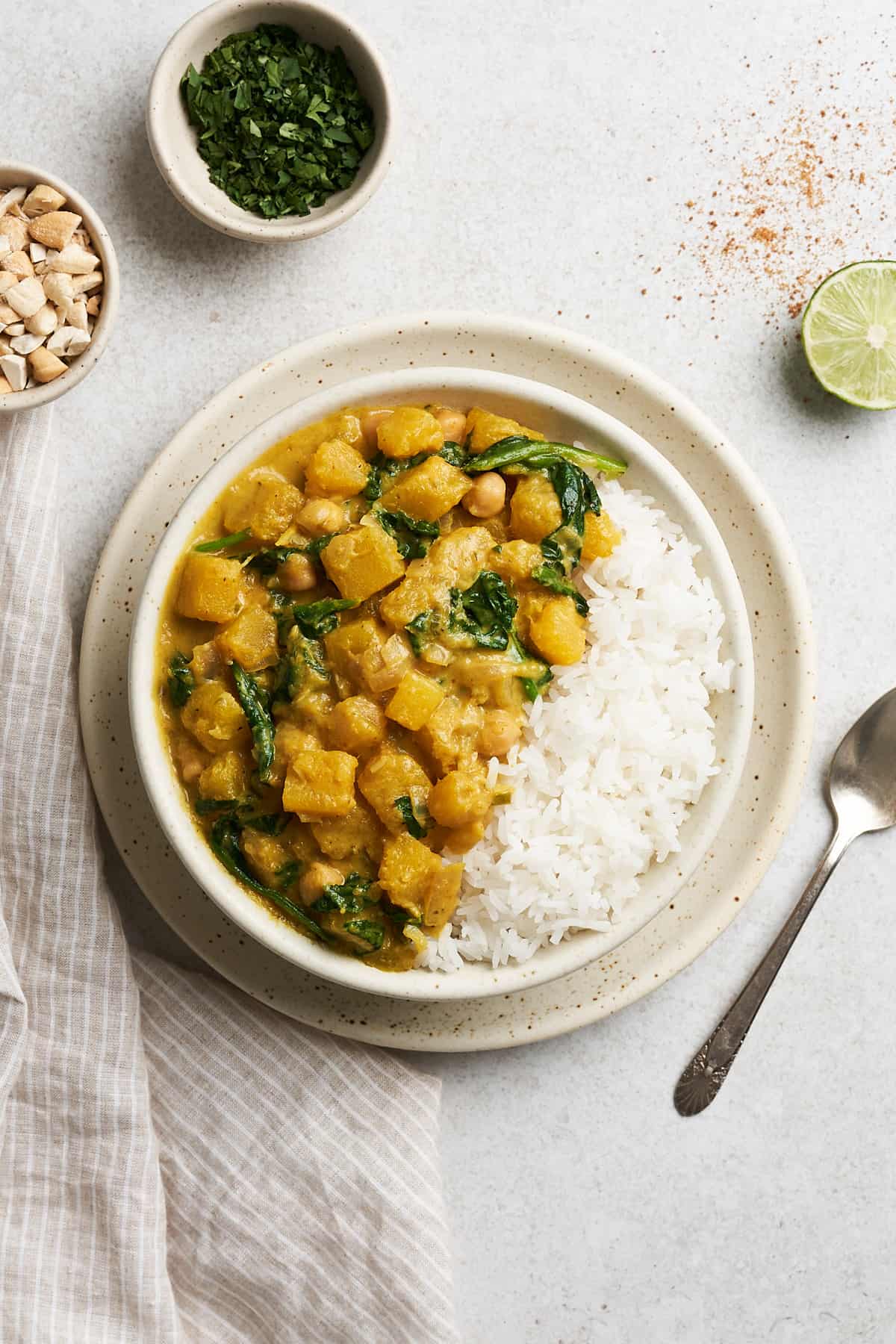
- Jasmine rice
- Flatbreads like vegan naan
- Chopped cashews or peanuts
- Chopped cilantro
- Lime Wedges
🌡️ Storage & reheating
Follow these simple storage and reheating tips to keep your butternut squash curry fresh for longer:
- Fridge: Store leftovers in an airtight container for up to 4 days. The flavors meld together as they sit, making leftovers even more delicious.
- Freezer: This curry freezes well for up to 3 months. Make sure it’s cooled completely before transferring it to a freezer-safe container.
- Reheating: Reheat leftovers in a pot over medium heat, stirring occasionally until warmed through. If the curry is a little too thick, a splash of vegetable broth or water to thin it out.
♻️ Variations
- Protein boost: Add tofu or tempeh cubes for an additional protein punch.
- Veggies: Mix in bell peppers, zucchini, snow peas, baby corn, or eggplant.
- Grains: Instead of rice, serve your curry with rice noodles, quinoa, or couscous.
- Oil-free: You can water fry the veggies or reduce some of the coconut milk and use the fat from the milk to sauté the veggies and aromatics (this is actually how Thai curry is traditionally made).
🧑🍳 Top tips
- Use fresh spices: Always use fresh garlic and ginger whenever possible. Ground spices lose their potency over time and don’t provide the same flavor.
- Full-fat coconut milk: Opt for full-fat canned coconut milk. It provides a creamier texture and richer flavor than coconut milk from a carton.
- Curry paste: Different brands vary in spice and salt levels. Start with a smaller amount, then add more as you need or want.
- Consistent cube size: Cut the butternut squash into small, evenly-sized pieces to ensure even and quick cooking.
- Don’t overcook the greens: Add leafy greens toward the end so they retain their vibrant color and a little bit of texture.
- Add lime juice last: Like the greens, it’s important to stir the lime juice in at the end. Adding it early can make your curry bitter.
- Resting time: If possible, let the curry sit for a few minutes before serving. This melds the flavors together.

💬 FAQ
Yes, you can use frozen butternut squash cubes for this butternut squash curry. Just make sure you thaw and drain excess water before adding them in.
If your butternut squash curry is too thick, you can thin it out with a bit of vegetable stock or water until it reaches the desired consistency.
Absolutely! Just combine all the ingredients in the slow cooker, then set it on low for 6-8 hours or high for 3-4 hours. Make sure the butternut squash is tender before serving, and remember to stir occasionally and adjust the liquid levels if necessary.
🍴 More soups & stews
If you loved our butternut squash curry, try some of these other soups and stews out and let us know what you think:
- Vegan Pumpkin Soup: Silky smooth, comforting, and nourishing soup.
- Chickpea Soup: A healthy, vibrant, and comforting meal.
- Vegan Sweet Potato Soup: Comforting and soul-warming lunch or dinner.
- Vegan Pumpkin Chili: Rich flavors of pumpkin purée infused into traditional chili.
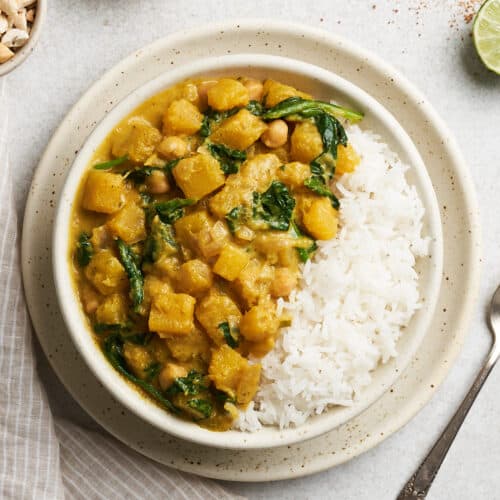
30-Minute Butternut Squash Curry
Equipment
- Vegetable peeler
- Cleaver or chef’s knife
- Cutting board
- Measuring cups
- Dutch oven
Ingredients
- 2 tablespoons coconut oil
- 1 medium red onion or 3 large shallots (diced)
- 4-5 garlic cloves (minced)
- 2 fresh green or red chiles (diced)
- 2 tablespoons freshly grated or minced ginger
- 4 tablespoons yellow or red curry paste
- ½ teaspoon ground turmeric
- 1 ¾ pounds butternut squash (peeled and cubed)
- 15 ounces (1 small can) chickpeas (drained and rinsed)
- 13 ½ ounces (1 small can) full-fat coconut milk
- 1 ½ – 2 cups vegetable broth
- 1 tablespoon tamari (or soy sauce)
- 1 tablespoon coconut sugar
- 1 tablespoon lime juice
- 3-4 cups baby spinach (or kale)
- Salt to taste
For serving
- Jasmine rice
- Chopped cashews (or peanuts)
- Chopped cilantro
- Lime wedges
Instructions
- Heat the coconut oil in a Dutch oven or large pot over medium. Add the onion and sauté it for 4-5 minutes until tender and translucent.
- Add the minced garlic, chiles, and ginger, cooking for another minute or so. Then, add the curry paste and turmeric, stirring to combine and open up the aromas.
- Add the butternut squash, chickpeas, coconut milk, and 1 ½ cups of vegetable broth. Stir everything, then bring the mixture to a simmer for 15-20 minutes, or until the squash cubes are fork-tender. Add more broth as needed.
- Once the squash is tender, add the tamari, coconut sugar, lime juice, and baby spinach. Stir to combine and finish cooking for 1-2 minutes to wilt the spinach.
- Taste and season the curry with salt to your liking, then serve it immediately over jasmine rice with garnishes like chopped cashews or peanuts, cilantro, and extra lime wedges. Happy eating!
Video
Notes
- Use fresh spices: Always use fresh garlic and ginger whenever possible. Ground spices lose their potency over time and don’t provide the same flavor.
- Full-fat coconut milk: Opt for full-fat canned coconut milk. It provides a creamier texture and richer flavor than coconut milk from a carton.
- Curry paste: Different brands vary in spice and salt levels. Start with a smaller amount, then add more as you need or want.
- Consistent cube size: Cut the butternut squash into small, evenly-sized pieces to ensure even and quick cooking.
- Don’t overcook the greens: Add leafy greens toward the end so they retain their vibrant color and a little bit of texture.
- Add lime juice last: Like the greens, it’s important to stir the lime juice in at the end. Adding it early can make your curry bitter.
- Resting time: If possible, let the curry sit for a few minutes before serving. This melds the flavors together.
- Nutritional information is a rough estimate and should not be taken as health advice.
Nutrition

Justine Drosdovech is a food writer, photographer, and one of the founders of Broke Bank Vegan. She is a self-taught plant-based chef but uses her healthcare background to craft dishes that are both delicious and nourishing.