
Stir-Fry Sauce
This easy-to-make stir-fry sauce transforms everyday meals into a mouthwateringly delicious masterpiece! Made with 5 ingredients, it’s an affordable yet powerful way to add savory, sweet, and spicy depth to any stir-fry or vegetable-forward recipe.
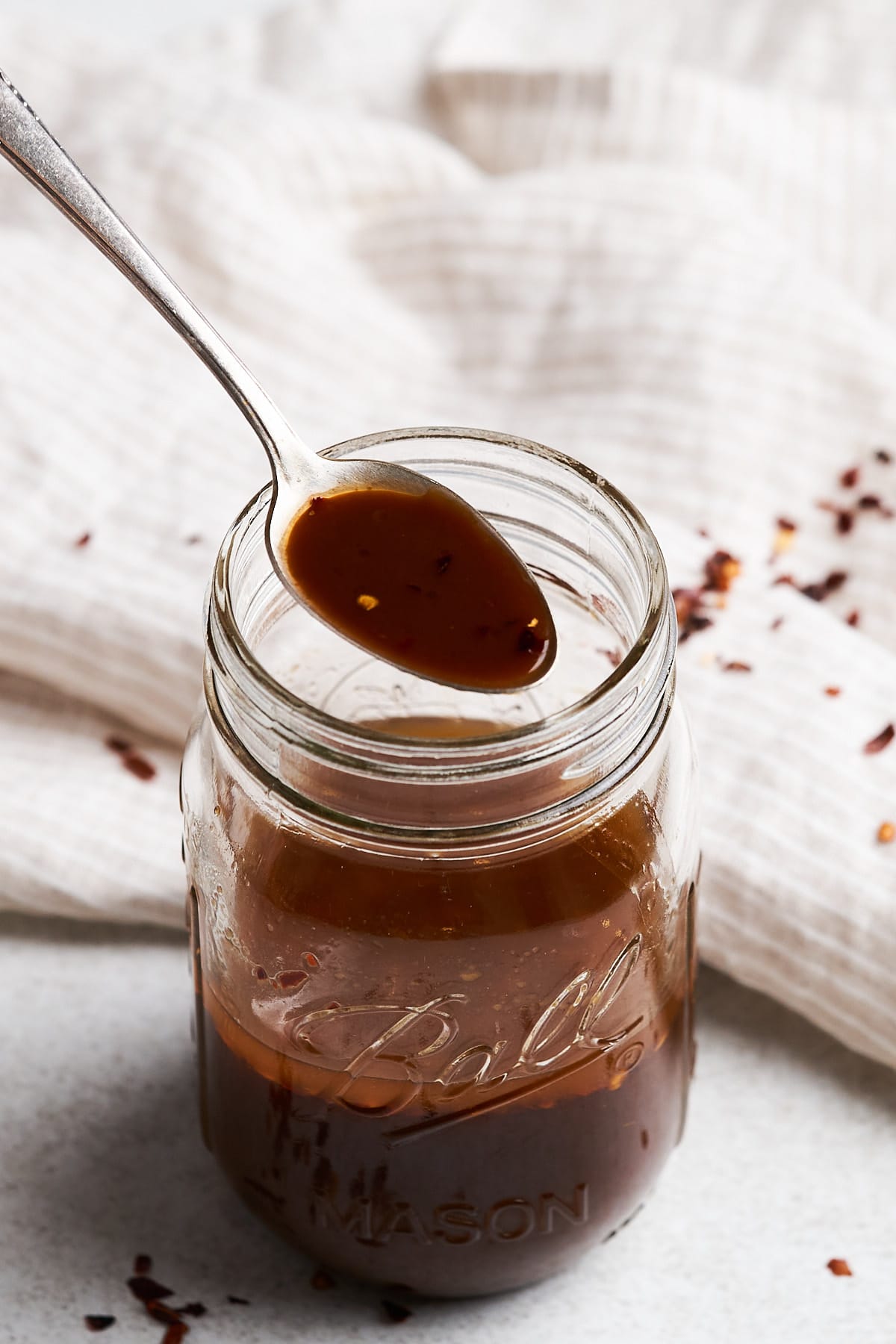
If you want takeout without the hefty price tag, this sauce is your new secret weapon. Like my peanut sauce, it takes all of 5 minutes to whip up but adds a burst of flavor to vegan chicken, tofu, and vegetable stir-fries. It’s so simple that you’ll wonder why you haven’t tried it sooner.
Why I love this recipe
I always prefer making my own stir-fry sauce since I can customize the flavors and control what goes in it. This recipe strikes the perfect balance between sweet, savory, spicy, and umami, coating your favorite stir-fry ingredients in a thick, glossy glaze.
With only a handful of ingredients, like soy sauce, brown sugar, and red pepper flakes, it tastes way better than anything you can find at the store for a fraction of the price. Plus, its concentrated flavors mean a little goes a long way!
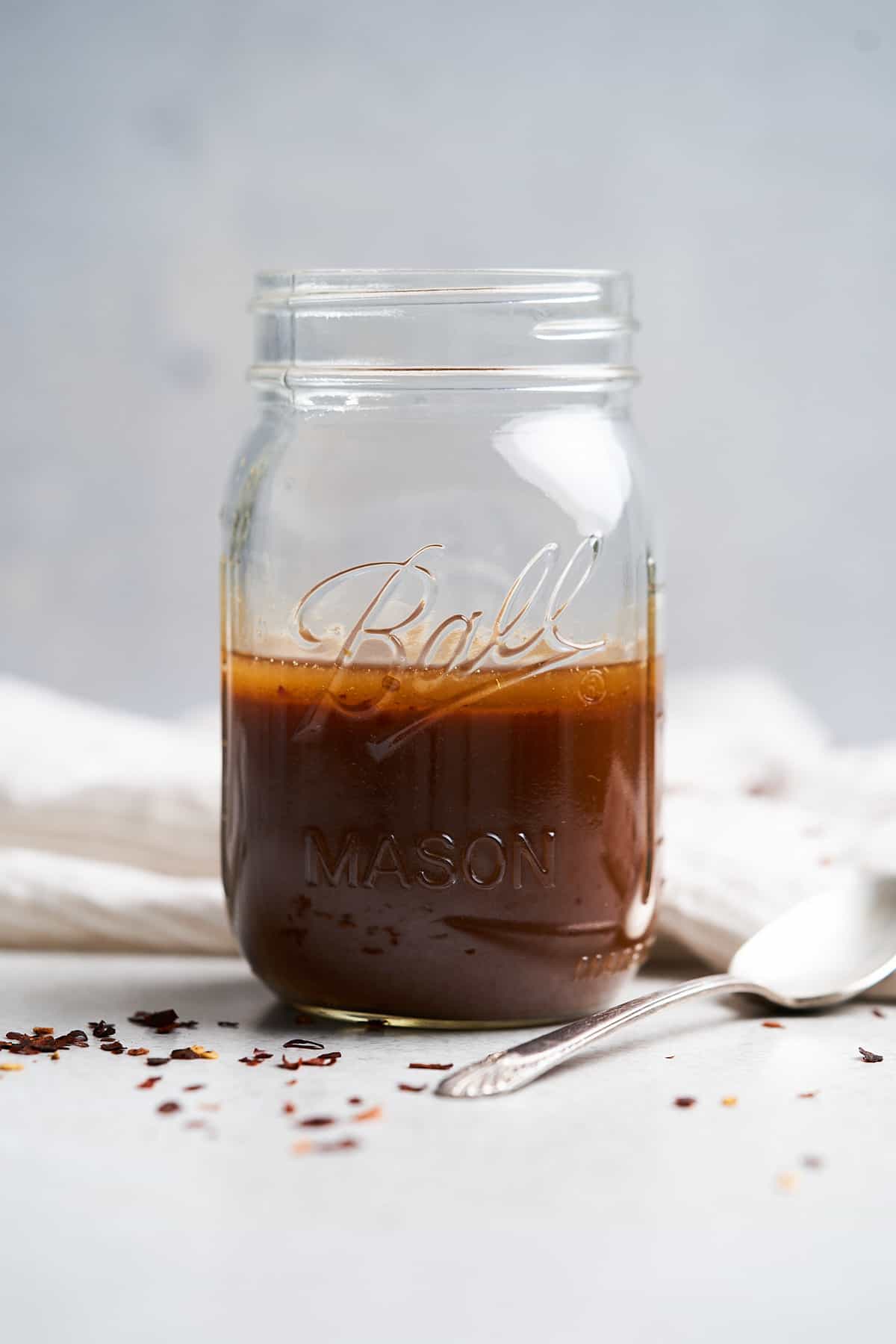
It’s incredibly easy to whip up, requiring only a mason jar and a whisk. So, whether you’re looking for the perfect pairing with tofu and tempeh or just someone who needs a go-to all-purpose sauce, this recipe has you covered.
Ingredient notes
You likely have most, if not all, of the ingredients for this stir-fry sauce in your pantry. Let’s take a look at everything you’ll need, including the best substitutes.
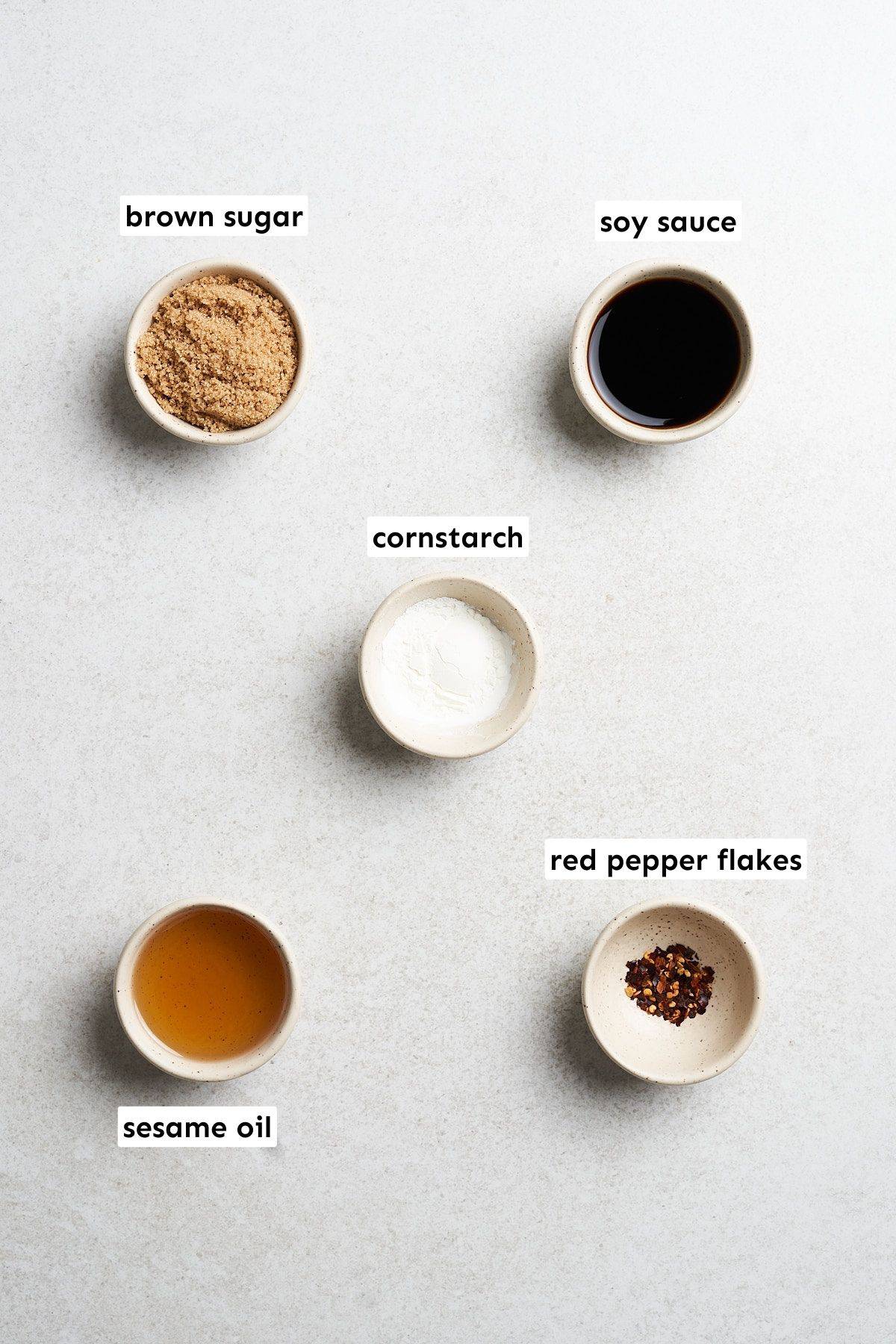
Low-sodium soy sauce
Makes up the umami backbone of the sauce, adding savory depth and saltiness. I HIGHLY recommend using low-sodium soy sauce to prevent an overly salty taste.
Substitute: Replace soy sauce with low-sodium tamari or coconut aminos, using a 1:1 ratio for a gluten-free alternative.
Brown sugar
Balances the saltiness of the soy and adds a deep, molasses-like sweetness. Use organic or vegan-certified brown sugar to ensure it hasn’t been processed through bone char.
Substitute: You can use an equivalent amount of coconut sugar as a more natural, less refined option.
Red pepper flakes
Adds a hint of heat, bringing a subtle complexity to the sauce without being blisteringly hot.
Substitute: If you don’t have red pepper flakes, swap in ground cayenne pepper, using about half the amount for a similar heat level. You can also try sambal oelek.
Sesame oil
Imparts a nutty and rich flavor, essential for a well-balanced stir-fry taste. You’ll find the highest quality sesame oil at Asian food markets, but just make sure it’s pure.
For a complete ingredient list and step-by-step guide, scroll down to the recipe card.
How to make
Learn the best way to make stir-fry sauce with my straightforward, easy-to-follow instructions. Look for the tips in green throughout this section for consistent and successful results!
Assembly
Step 1
In a mason jar or container, combine the water and cornstarch. Whisk them together until the cornstarch is completely dissolved.
Ensuring the cornstarch is fully dissolved in water before adding the other ingredients prevents lumps and ensures a smooth sauce consistency.

Step 2
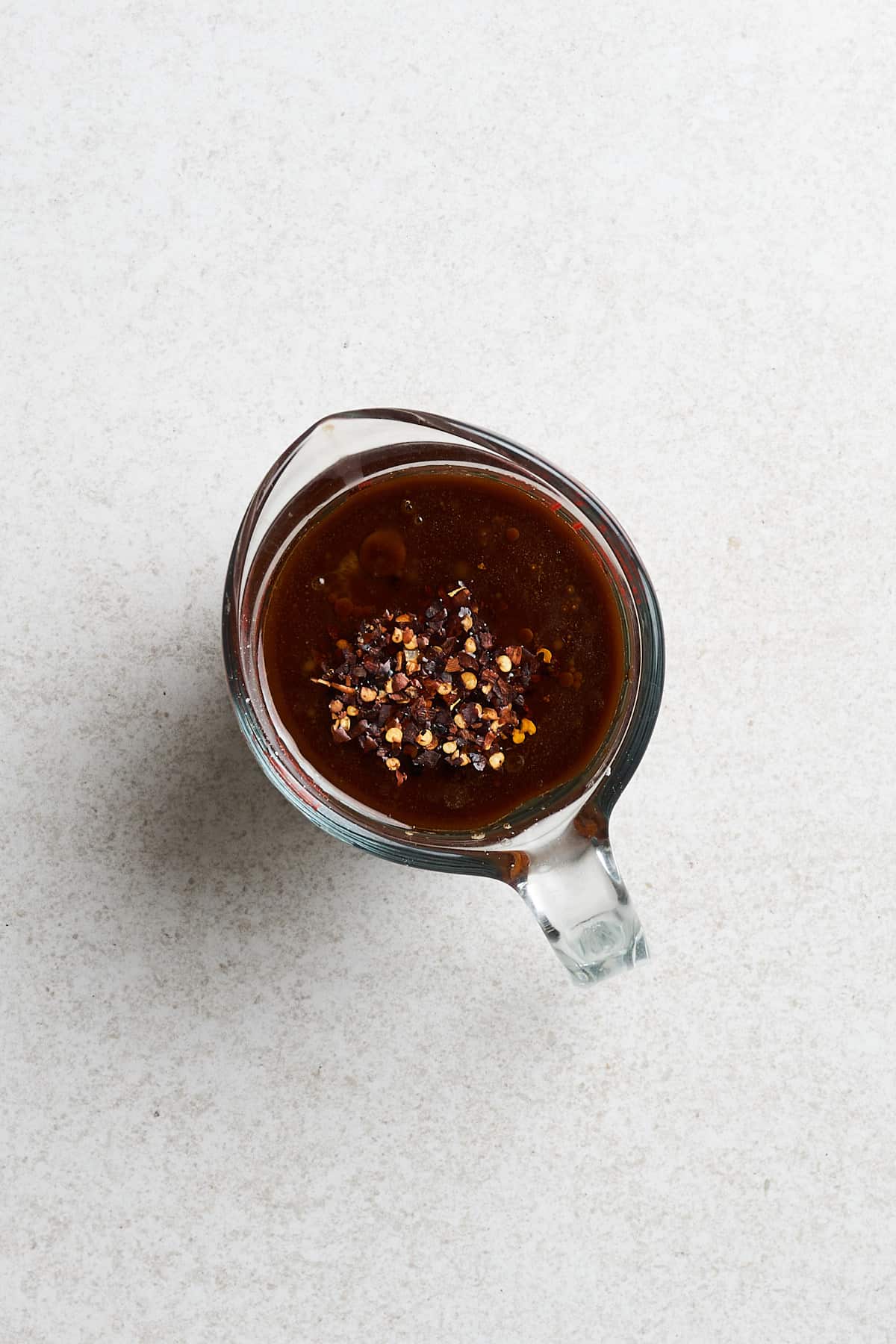
Add the soy sauce, brown sugar, and optional red pepper flakes to the cornstarch mixture. Whisk them well to combine thoroughly.
Step 3
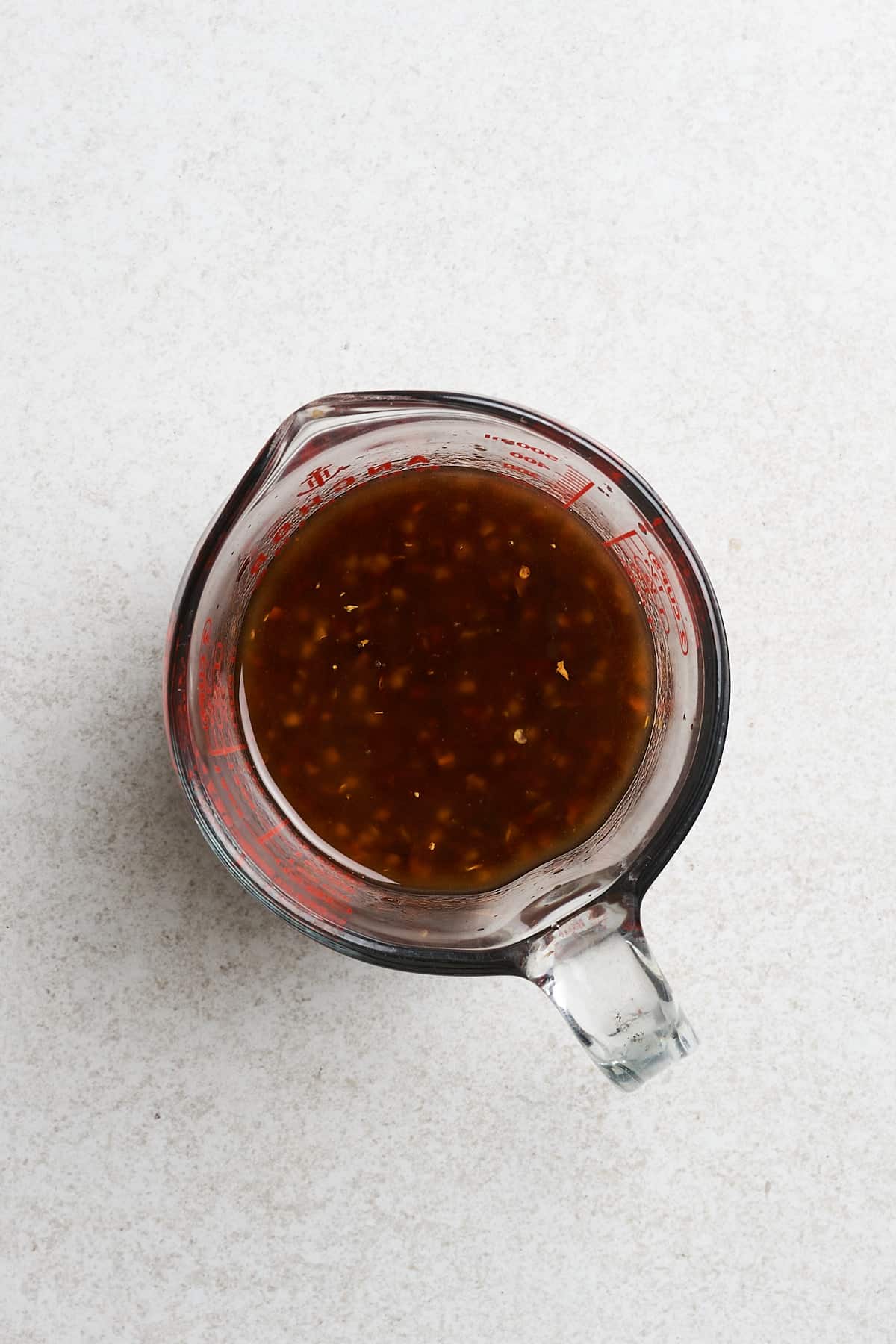
Gradually whisk in the sesame oil until the mixture is combined and emulsified. Taste and adjust the sweetness or saltiness to your liking before serving. Happy eating!
Slowly adding and whisking in the oil helps it integrate into the sauce, creating a cohesive mixture rather than separating.
Serving suggestions
You can store the sauce for later or serve it immediately in your favorite stir-fry recipe with steamed white rice or noodles. I like to use the same recipe for my teriyaki tofu but with this sauce instead.
It’s also delicious as a tempeh, tofu, or vegan chicken marinade. You can even omit the cornstarch and serve it as a dipping sauce for spring rolls or dumplings, adding a punch of flavor to these classic Asian appetizers.
Cooking tips
Cornstarch consistency: Getting the right consistency with cornstarch is key! Mix it with room-temperature water until smooth to avoid lumps in the sauce.
Add seasonings: Experiment with freshly grated aromatics, like ginger and garlic, to impart a vibrant, unique flavor profile.
Heat control: When mixing the sauce with stir-fry ingredients, use low heat to prevent the sugar from burning and allow flavors to meld together gently.
Frequently asked questions
Yes, cornstarch is needed to thicken the sauce as it’s heated. Without it, the sauce will be runnier but still flavorful.
To make this recipe gluten-free, use tamari or a certified gluten-free soy sauce.
If your stir-fry sauce is thicker than you want, add more water or vegetable broth to thin it to your desired consistency.
Storing & reheating
Stir-fry sauce is ideal for prepping ahead to have on hand for quick, flavorful meals. Store any leftover sauce in a mason jar or airtight container for optimal freshness. It will keep for up to 6-7 days in the fridge and 3 months in the freezer.
Freeze it in a freezer-safe container or ice cube trays for portioned use. To reheat, thaw it in the fridge overnight and warm it in a pan over low. Stir or shake the jar well to re-emulsify the sauce.
Serving size
Each batch of stir-fry sauce yields just over 1 cup, making enough sauce for about a pound of protein and 4-6 cups of vegetables, which should comfortably feed around 4-6 people.
This recipe is also meal prep-friendly, as it’s easily scalable and keeps well in your fridge or freezer. Make a few jars with slight variations in seasonings, and keep them on hand for quick and easy stir-fries throughout the week.
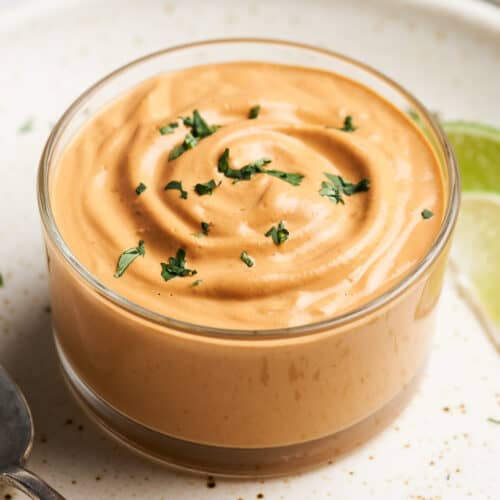
More vegan sauce recipes


Hungry for more?
If you enjoyed this recipe, please consider leaving a star rating and a comment down below! Your feedback not only helps others discover our blog but also gives us valuable insights from your experience.
Don’t forget to subscribe to our newsletter for the latest recipes, and check out our shop for our top kitchen recommendations. Thank you for supporting BBV!
Recipe
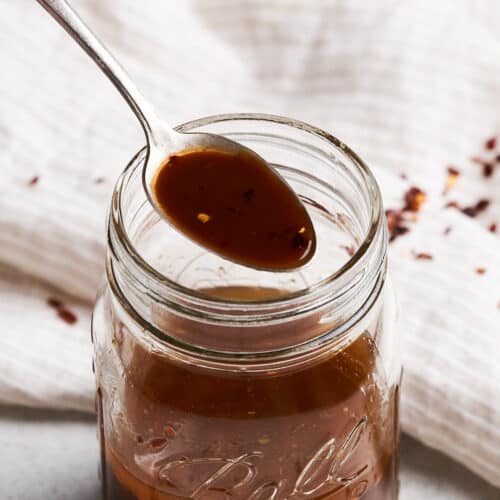
Stir-Fry Sauce (Only 5 Ingredients)
Equipment
- Measuring cups
- Measuring spoons
- Mason jar
Ingredients
- ¼ cup room-temperature water
- 2 tablespoons cornstarch
- ½ cup low-sodium soy sauce (or tamari)
- 3 tablespoons brown sugar (or coconut sugar)
- ½ teaspoon red pepper flakes (optional)
- 3 tablespoons sesame oil
For serving
- Tofu
- Tempeh
- Vegan chicken
Instructions
- Combine the water and cornstarch in a mason jar or container, whisking both until no clumps remain.
- Add the soy sauce, brown sugar, and red pepper flakes, whisking to combine. Slowly whisk in the sesame oil until it emulsifies.
- Serve the sauce immediately in a stir fry recipe with tofu, tempeh, or vegan chicken, veggies, and rice, letting it simmer to thicken. Or, store it in a mason jar in the fridge for up to 6-7 days. Happy eating!
Notes
Nutrition

Mitch Chapman is a food writer, photographer, and one of the founders of Broke Bank Vegan. With a background in healthcare and the restaurant industry, he has a passion for sharing healthy yet flavorful plant-based food.