
Peanut Sauce
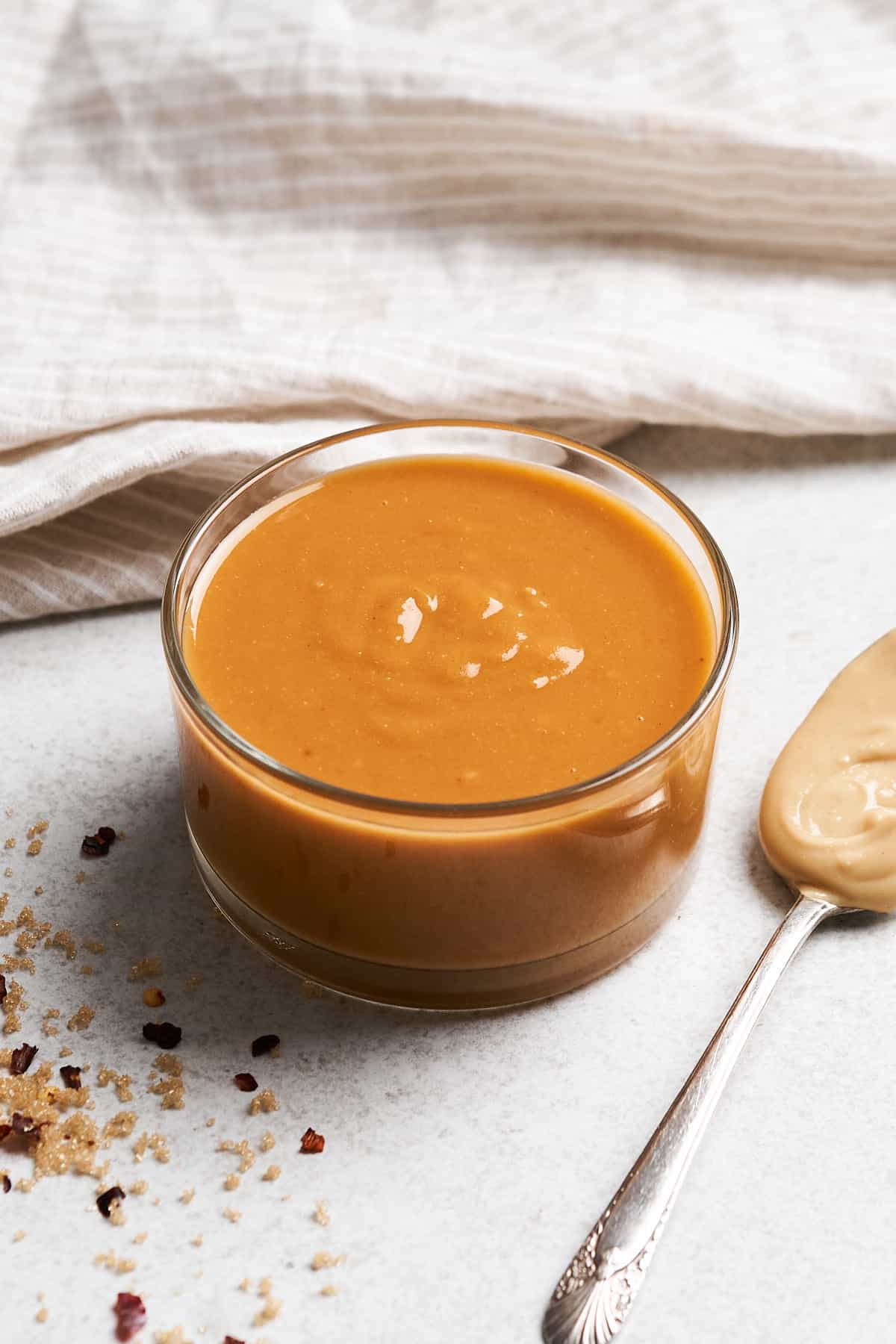
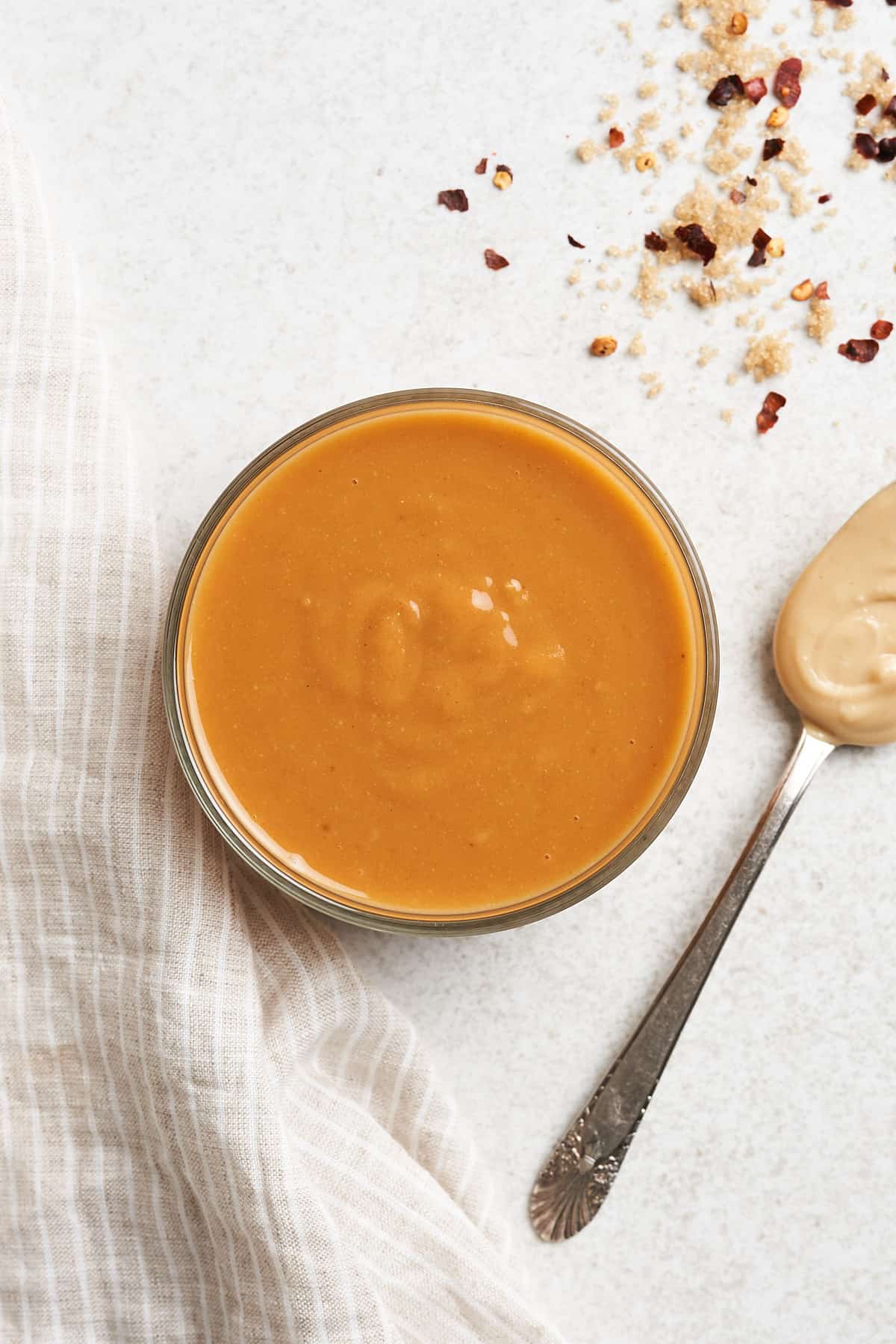
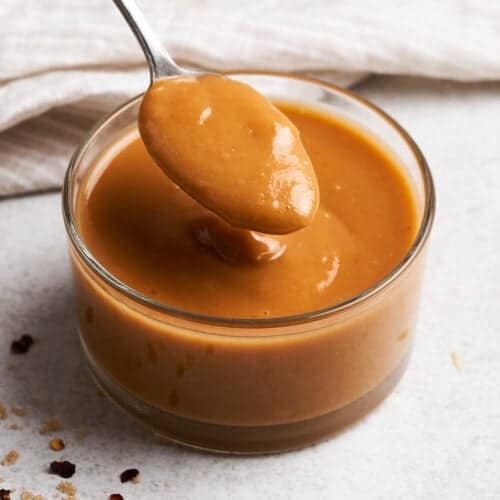
This homemade peanut sauce recipe is incredibly easy to make, budget-friendly, and so versatile! Combining the creaminess of natural peanut butter with a blend of tangy and spicy ingredients, it’s perfect for adding a punch of flavor to your meals. Serve it with stir-fries, noodles, salads, or spring rolls!
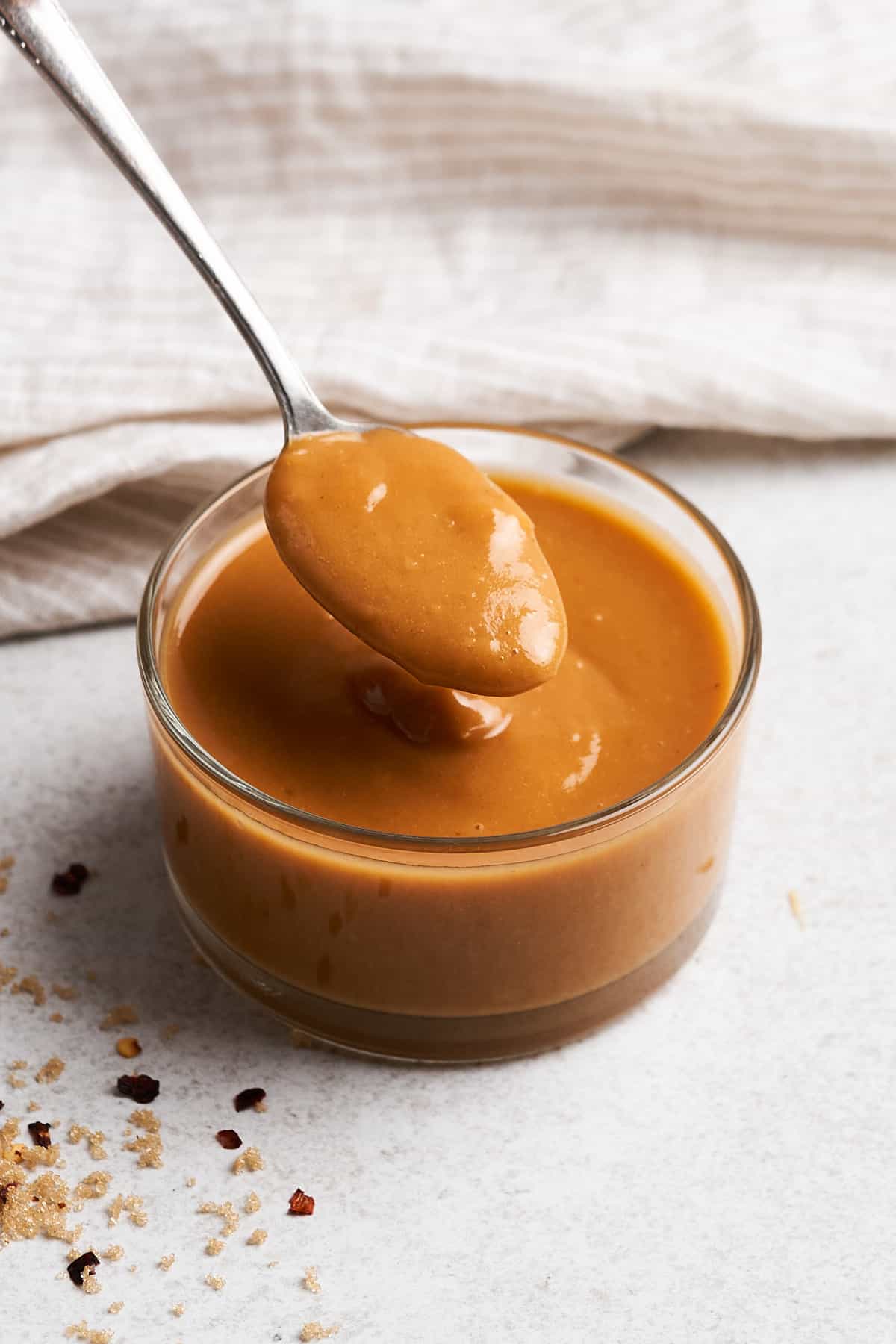
Along with my favorite stir-fry sauce, I always keep a jar of this peanut sauce in my fridge for speedy weeknight dinners. It comes together in under 5 minutes but can be served with just about everything, from tempeh and tofu to salads and roasted veggies.
Why I love this recipe
This peanut sauce recipe has just a handful of ingredients, like peanut butter, tamari, Sriracha, and ginger, but it’s packed with some serious flavor. It’s so good that you’ll want to eat it straight from the jar (don’t worry, I often do)!
Preparation is a breeze, too! Just add everything to a bowl or jar, and you can have it whisked and ready to go in no time. The result is a perfectly balanced creamy, tangy, and slightly spicy sauce everyone will love.
Whether you’re a busy parent or a student looking for a quick, low-cost sauce, this versatile recipe is just what you need. It’s great for last-minute flavor boosts to weeknight dinners or spicing up your meal preps.
Ingredient notes
You very likely already have all the ingredients for this peanut sauce in your pantry, so skip the grocery store trip and take a look at everything you’ll need below!
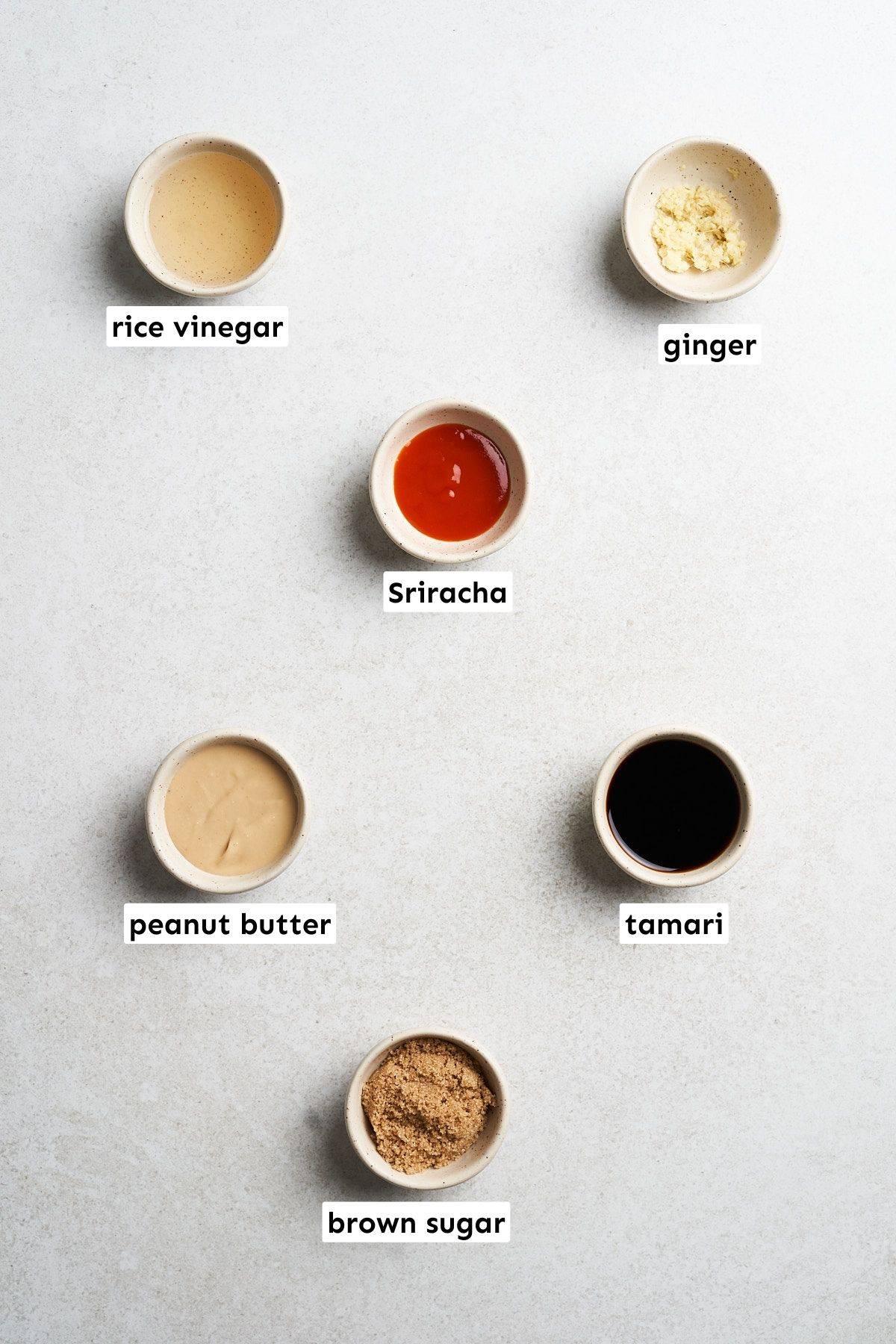
Smooth natural peanut butter
Provides a rich, creamy base with a nutty flavor. Avoid “creamy” peanut butter, like from Jiff or Skippy, as these often contain sugar and hydrogenated oils. You want natural peanut butter with just peanuts and salt as the ingredients.
Substitute: For a nut-free option, you can use tahini or sunflower seed butter. Just keep in mind that these will alter the flavor slightly.
Low-sodium tamari
Adds a savory, umami depth. If you only have regular tamari available, I suggest starting with half the amount and increasing it a teaspoon at a time to prevent an overly salty sauce.
Substitute: Low-sodium soy sauce can be used, but it isn’t gluten-free. Coconut aminos are a great gluten-free and lower sodium option, though slightly sweeter.
Sriracha
Adds a subtly spicy, garlicky kick to the sauce. Double-check the ingredient list for no added sugar in your Sriracha. Look for brands like Huy Fong, Underwood Ranch, Tabasco Brand, and Sky Valley.
Substitute: Chili garlic paste or sambal oelek can be used for a similar heat level with a slightly different flavor profile. Red pepper flakes can also be used for heat, but they won’t provide the garlic flavor.
Rice vinegar
Provides a mild and slightly sweet acidity, enhancing the overall freshness of the sauce. You’ll find the best quality rice vinegar at Asian food markets.
Substitute: Lime juice works well as an alternative, providing a more pronounced and zesty acidity. Use an equivalent amount in this recipe.
For a complete ingredient list and step-by-step guide, scroll down to the recipe card.
How to make
Learn how to make peanut sauce with my straightforward, easy-to-follow instructions. Look for the tips in green throughout this section for consistent and successful results!
Assembly
Step 1
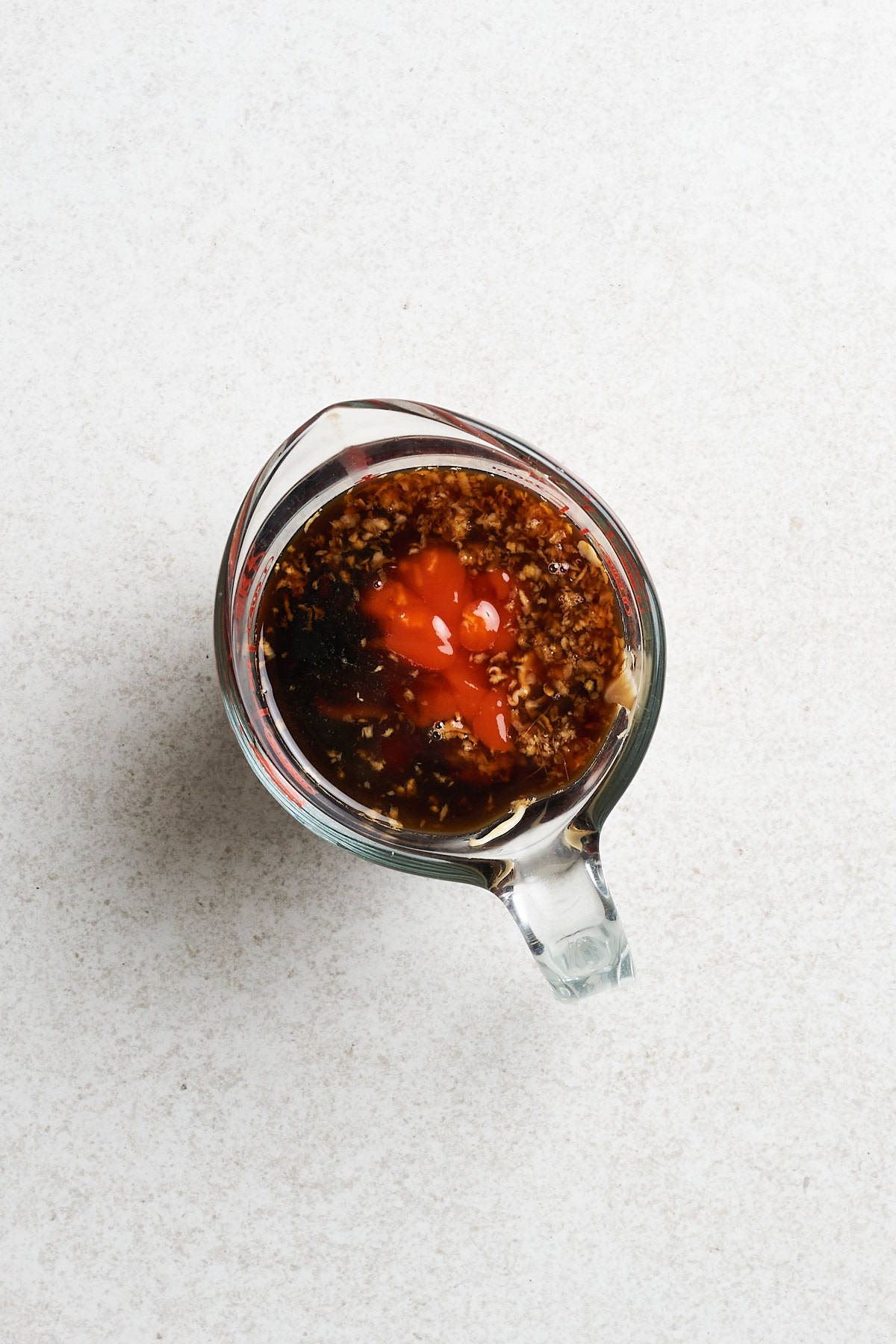
Combine peanut butter, tamari, brown sugar, Sriracha, rice vinegar, and fresh ginger in a bowl or jar. Use a whisk or shake the jar until all ingredients are thoroughly mixed and smooth.

Step 2
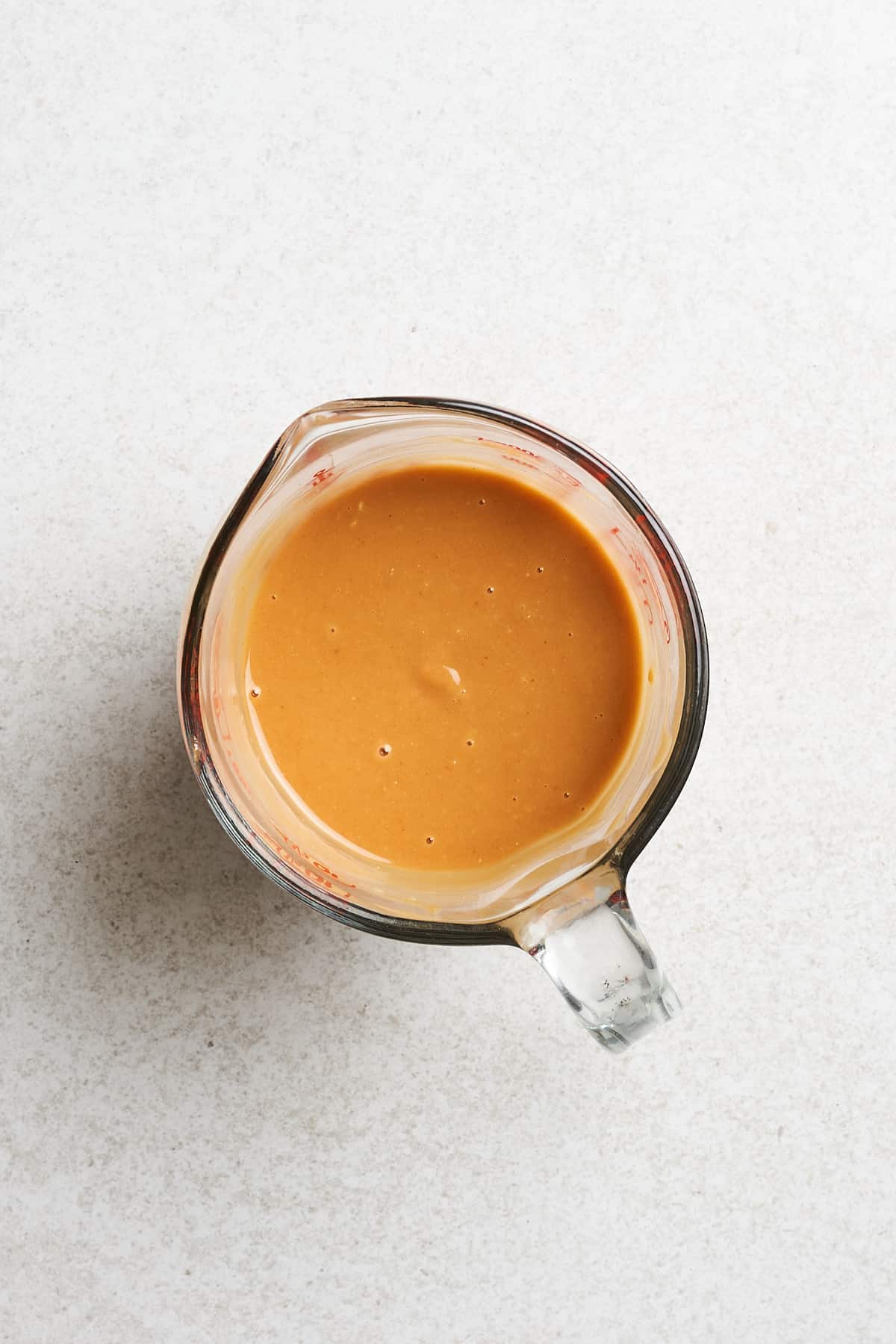
Slowly add water while whisking until the sauce reaches your desired consistency, then serve it with your favorite dishes. Happy eating!
Start with less water and gradually add more to avoid making the sauce too thin. You can always add more, but you can’t take it away!
Expert tip
For the best peanut sauce, you really need to tailor the flavor balance to suit your preferences. I always suggest starting with my base recipe and then making changes from there.
Taste as you go and adjust the sweet (sugar), sour (vinegar or lime juice), salty (tamari or soy sauce), and spicy (Sriracha or chili paste) elements to create a well-balanced flavor profile.
The texture of your sauce is also just as important! It will thicken as it cools, so aim for a slightly runnier consistency than your final desired thickness.
Serving suggestions
Once combined, feel free to store your peanut sauce for future meals or serve it immediately. It goes perfectly with spring rolls and Asian-style salads, adding a rich, nutty element that balances the fresh elements.
This sauce can also be used as a marinade for grilled tofu, tempeh, or vegan chicken with steamed white rice or noodles and your favorite stir-fried veggies.
Cooking tips
Use fresh ginger: Fresh ginger offers a zesty kick that powdered ginger can’t match. Grate it finely for a more even distribution of flavor.
Stir thoroughly to avoid lumps: Whisk the sauce vigorously to ensure all ingredients are well incorporated and the sauce is smooth, especially if your peanut butter is thick!
Let the sauce rest: After mixing, let the sauce sit for a few minutes. This resting period allows the flavors to meld together better.
Frequently asked questions
Almond or cashew butter are both delicious substitutes for peanut butter.
You can use a sugar substitute like stevia or a small amount of maple syrup or agave. Keep in mind this will slightly change the flavor and texture.
Ensure your peanut butter is at room temperature and whisk continuously while adding the liquid ingredients to prevent lumps.
Storing & reheating
Store your peanut sauce in an airtight glass container or mason jar to preserve its freshness. In the fridge, it can last up to a week, and in the freezer, it should be good for up to three months.
Thaw it in the refrigerator and stir well before use, especially if it separates. If the sauce thickens too much in the fridge, gently reheat it on the stove or in the microwave, adding a little water if necessary to thin it out.
Serving Size
This peanut sauce recipe yields about 1 ⅔ cups, which is enough for approximately 6 servings of just over ¼ cup each. Since it stores in the fridge or freezer so well, it’s also great for meal prep!
Make a double or triple batch with different seasonings in each one to keep your meals varied and exciting. This is the perfect all-purpose sauce and marinade to keep on hand if you’re looking for a cost-effective, healthier alternative to store-bought sauces.
More vegan sauce recipes


Hungry for more?
If you enjoyed this recipe, please consider leaving a star rating and a comment down below! Your feedback not only helps others discover our blog but also gives us valuable insights from your experience.
Don’t forget to subscribe to our newsletter for the latest recipes, and check out our shop for our top kitchen recommendations. Thank you for supporting BBV!
Recipe
Quick Peanut Sauce (6 Ingredients)
Equipment
- Mason jar
- Bowl
- Whisk
Ingredients
- ½ cup smooth natural peanut butter (not creamy)
- 3 tablespoons low-sodium tamari (coconut aminos or soy sauce)
- 2 tablespoons brown sugar (or coconut sugar)
- 2 tablespoons Sriracha (chili garlic paste or sambal oelek or red pepper flakes)
- 3 tablespoons rice vinegar (or lime juice)
- 2 teaspoons fresh ginger (peeled & grated)
- 5-6 tablespoons water to thin
Instructions
- Combine the peanut butter, tamari, brown sugar, Sriracha, rice vinegar, and ginger in a bowl or jar. Add water slowly while whisking until smooth and creamy.
- Taste and adjust any of the ingredients to suit your liking. Use your peanut sauce immediately or store it in a mason jar for later. Happy eating!
Notes
Nutrition

Justine Drosdovech is a food writer, photographer, and one of the founders of Broke Bank Vegan. She is a self-taught plant-based chef but uses her healthcare background to craft dishes that are both delicious and nourishing.